
Marine Paint Protection Film (PPF): Is It Worth It for Your Boat?
You've invested serious money in your boat. Marine Paint Protection film (PPF) is one of the smartest ways to protect that investment from the daily abuse of South Florida boating. But is it actually worth it for your vessel? Here's what PPF does, where it shines, and how to decide.
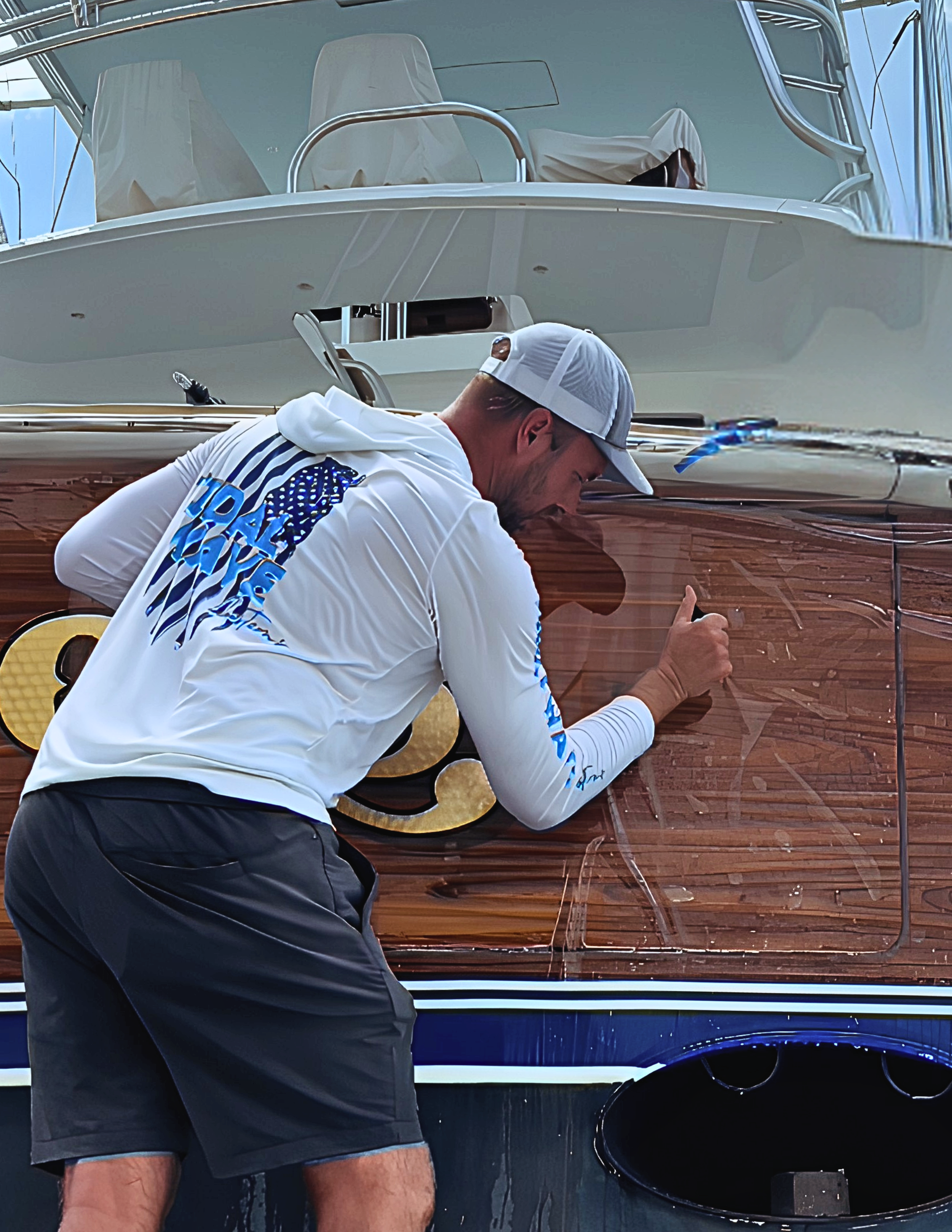
Tidal Wave Customs Team Installing Marine Paint Protection Film (PPF)
What Is Marine Paint Protection Film?
PPF is a clear, durable urethane film applied over your boat's gelcoat or paint. Think of it as an invisible shield: it absorbs the chips, scuffs, and scratches that would otherwise mar your finish, all while keeping your boat's original look completely intact. Our marine protection film service targets the areas that take the most punishment.
What PPF Protects Against
Dock rash and impact: fenders, pilings, and tight slips are tough on hull sides — PPF takes the hit instead of your gelcoat.
Chips and scratches: anchors, gear, and debris leave marks; film resists them.
UV and oxidation: quality film helps guard against the sun fading and dulling your finish.
Salt, grime, and staining: a smooth film surface is easier to keep clean.
Where to Apply PPF (You Don't Always Need Full Coverage)
One reason PPF is worth it is that you can apply it strategically. Many owners protect only the high-impact zones — the bow, hull sides at the rub rail, transom, and areas around hardware — for a fraction of full-coverage cost. Others wrap the entire hull for maximum protection on a high-value yacht. We help you target the spend where it matters most.
PPF on Top of a Wrap or Gelcoat
PPF works over factory gelcoat, paint, and even over a vinyl wrap to add another layer of defense. If you've already invested in a custom wrap, film over the high-wear areas helps it last longer and look newer.
So, Is It Worth It?
If you run your boat hard, keep it in a tight slip, or simply want to preserve a high-end finish and resale value, PPF almost always pays for itself in protected gelcoat and avoided repairs. For a lightly used boat that stays covered and pristine, partial coverage on impact zones may be all you need. Either way, professional installation is what makes film perform — poor edges and lifting come from rushed work, not good film.
Protect your investment. Tell us about your boat and we'll recommend the right PPF coverage.